Arabic first: what right-to-left really changes
Mirroring, typography, numerals, forms, icons and testing: what changes when a product is designed in Arabic instead of flipped at the end.
Hello. Tell us what you are building: write to us here, or on WhatsApp.
The chat did not open. You can write to us on WhatsApp.
Or on WhatsApp, are you interested in:
Opening WhatsApp… Open it here (opens in a new tab)
03UX
DABB is a technology solutions company from Riyadh, and our UI/UX design covers the whole path: research, product design and interfaces in Arabic and English. We map the flows, build prototypes you can try, design the Arabic screens from the first sketch instead of deriving them from English, and test it all with real users before it is built. Your developers then receive a design system they reuse in every release.
What we build
From the first interview to the components your developers reuse, in Arabic and English.
User research: interviews and analytics that turn assumptions into a clear brief. The design then starts from what your users do, not from what anyone guesses they do.
Product design in user flows and clickable prototypes. You tap through them and test them before any code is written, while a change is still a sketch and not a rebuild.
App UI design in Arabic and English. The Arabic screens are designed right to left from the first sketch, not flipped at the end, with their own type, numerals and forms.
Components and design tokens your developers reuse in every release. Each new screen, in Arabic or in English, starts from parts your product already has, so it matches the screens before it.
Selected work
Three games and one app. SANAM, Kingdom Land and Labaik Badal are live on both stores, and Jinaya is ready.
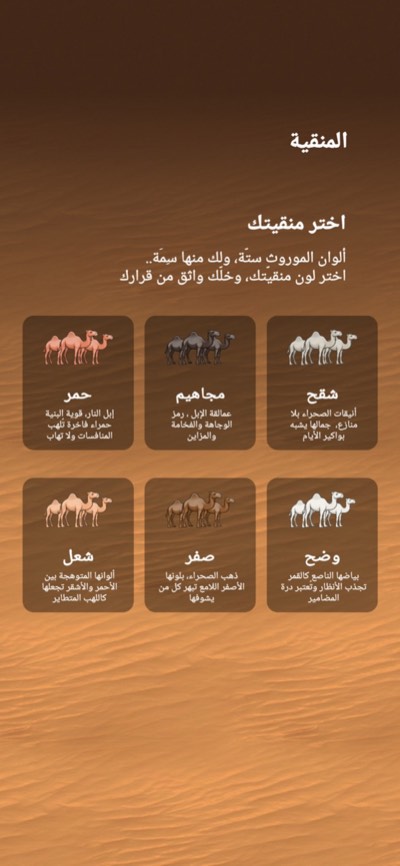
An Arabic-first interface for the Saudi platform Rai Alnadhar. It keeps the words of camel people as they say them, from manqiyah to al-Namous.
Our role Game design, Arabic-first interface, development and updates. Published by Rai Alnadhar.
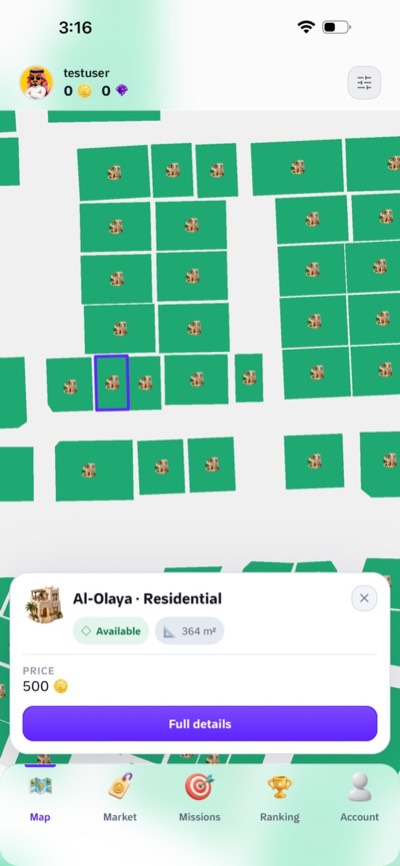
A property game on a map inspired by Riyadh, in Arabic and English: a district map of plots, a sheet for the plot you pick, a record for each property.
Our role Game design, interface and development for iOS and Android.
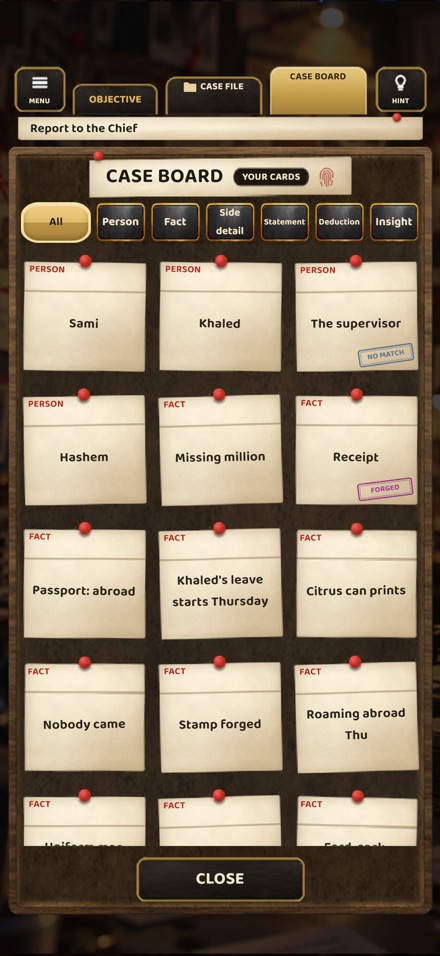
A detective game made from Mics’ true-crime podcast, in partnership with Mics. Its case board sorts clue cards by kind, beside a case file, an objective and a hint button.
Our role The whole game: its design, its art, the app’s interface, the programming and the build.
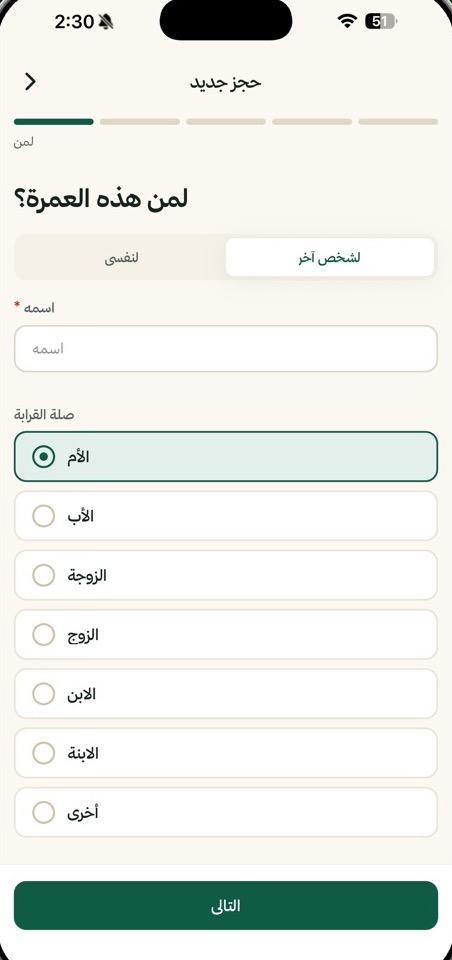
An app to arrange an Umrah, a pilgrimage to Makkah, on behalf of a loved one. It takes this sensitive service through four calm steps, from account to confirmed booking.
Our role Interface design and development for iOS and Android.
Mirroring, typography, numerals, forms, icons and testing: what changes when a product is designed in Arabic instead of flipped at the end.
How we work
Every project follows the same five stops, from your first message to the months after launch. At the third stop, the design becomes a clickable flow you can test.
You write to us. A senior engineer, not a salesperson, reads your message.
You receive A reply within one business day: next steps and first questions.
A 30–45 minute call on goals, constraints and what success means, under a mutual NDA if you want one.
You receive A scoped proposal within a week: timeline, team, budget options.
Before heavy engineering, the idea becomes something to try: a playable build, a clickable flow or a proof of concept.
You receive A prototype in your hands, and a milestone plan with dates.
Two-week sprints, each ending in a build you can open. Every change is peer-reviewed, tested and security-scanned.
You receive A working build every two weeks; a report every week.
A staged release with real-user monitoring. Then fixes, OS and store updates, performance tuning and new features under a support plan.
You receive A live product, yours on full payment, and a support plan.
Tools
The tools and methods of this service: Figma for flows and screens, design tokens for the system your developers reuse, and usability testing before any code.
Questions
Four parts: research and discovery, product and UX design, interface design, and design systems. Every project starts with a 30 to 45 minute discovery call, and within a week you receive a scoped proposal with the timeline, the team and budget options.
UX design is how a product works for the person using it: the research, the flows, the order of the steps. UI design is what they see and touch on each screen. In Kingdom Land, a selected plot opening a sheet with its size and price is UX; how that sheet looks is UI.
Yes. Flows and prototypes are tested with real users before they are built, and usability testing is part of the service. At the prototype stop, you hold a clickable flow and a milestone plan with dates before heavy engineering starts.
Yes, from the first sketch, never flipped at the end. SANAM’s interface is Arabic first, and Kingdom Land and Jinaya work in Arabic and English. Our article Arabic first: what right-to-left really changes sets out what changes in layout, type, numerals and forms.
The brief from the research, the flows and the clickable prototype you tested, the screens in Arabic, English or both, and the components and tokens your developers reuse. Ownership of the final deliverables transfers to you on full payment, and an NDA is available on request.
Yes. Strategy, design, engineering and QA sit under one roof, so nothing is lost between vendors. For SANAM, Kingdom Land, Jinaya and Labaik Badal we designed the interface and built the product too. Our page on app development for iOS and Android has the details.
Tell us who your users are and where they get stuck. A senior engineer reads every message and replies within one business day.
Plate
Status